


The Imaginary Audience
This Summer, a few weeks ago, I was sitting on the floor of my room with a sketchbook open on my knees, halfway through a portrait of someone I had seen in an old photograph. The pencil felt a little less familiar than I remembered, which was probably fair given how long it had been. It was not going well. The eyes were uneven, the shading near the jaw looked more like a smudge than a shadow, and somewhere around the third hour I did the thing I always do when a drawing stops cooperating. I imagined posting it.
Not on any particular app. Just a vague, formless imagining of an audience, a scroll of faces reacting to a portrait that, if I am honest, was mediocre at best. I imagined captions. I wondered which filter would hide the smudge near the jaw. And then I stopped, because I remembered something obvious that I keep forgetting on a weekly basis. Nobody was going to see this drawing. Nobody was waiting for it. There was no scroll, no faces, no captions required, because there was no audience in the first place. There was just me, a pencil, and a slightly lopsided jawline.
I think about that evening more than the size of the moment probably deserves, mostly because it was such a small, dumb thing, and small dumb things are usually where the real patterns hide. Somewhere in the last few years, without noticing it happening, I had trained myself to perform even when nobody was in the room. Not perform loudly. Just quietly, reflexively, the way you check your reflection in a shop window even when you are not particularly interested in how you look that day.
Some context on where this habit even came from, since it helps to know the shape of a person before you trust their conclusions. I grew up in a small town in Bengal that is known, if it is known for anything outside a fifty kilometre radius, for the light installations people put up during the Pujas. Entire streets get turned into moving pictures of mythological scenes, trains and cartoon characters, and what not, all built by hand, bulb by bulb, by men who never once called themselves engineers. I spent an unreasonable amount of my childhood taking apart old torches and dead radios just to see how the light got from one place to another. Somewhere along the way, without really noticing it, that habit turned into an interest in electronics, and eventually into a degree in Electronics and Communication. Long before software entered the picture, I was fascinated by circuits and the quiet satisfaction of making something physical work.
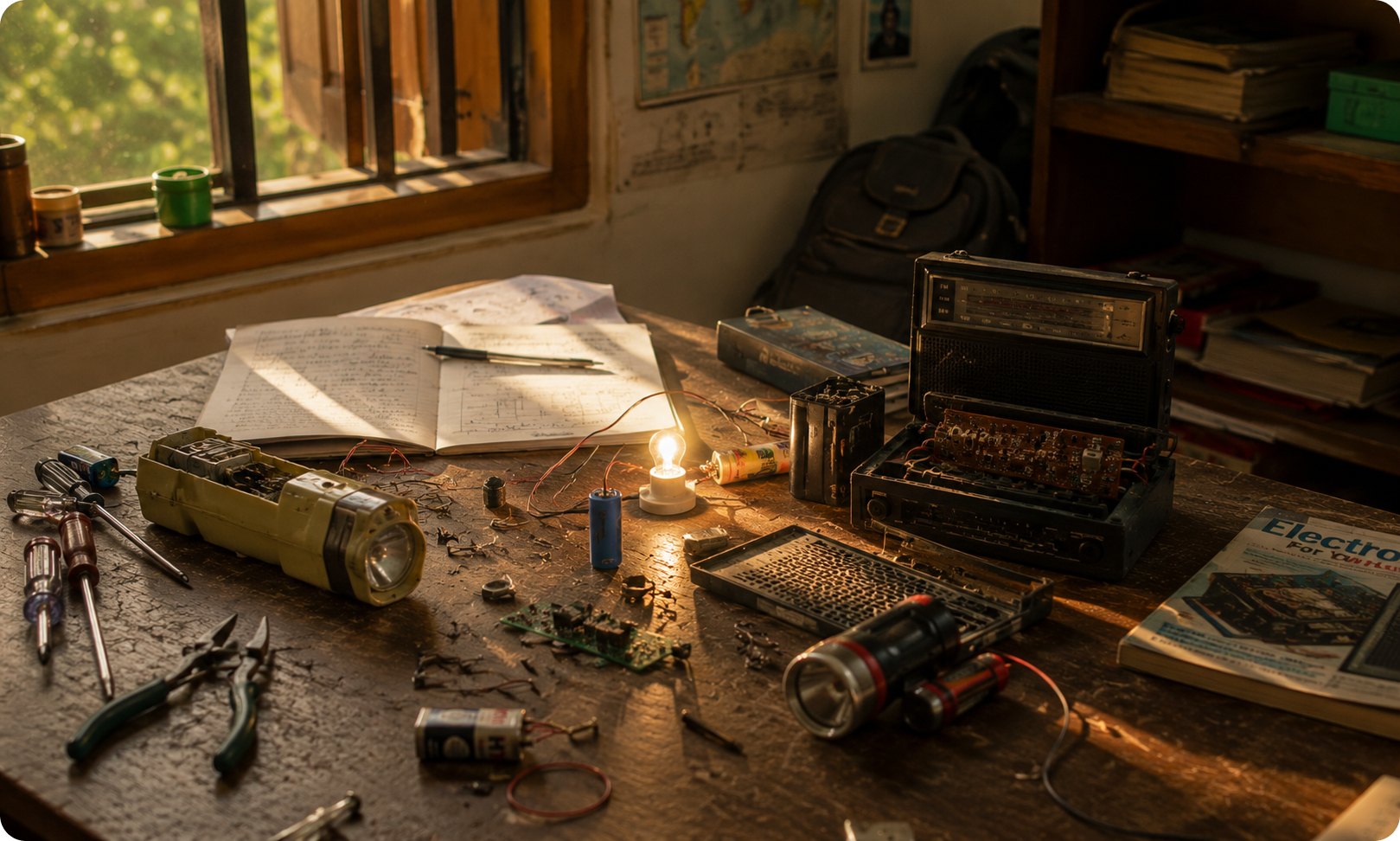
I also had, for reasons nobody in my family could ever quite explain, a genuine fondness for mathematics that had nothing to do with career planning. When the option came up to keep physics, chemistry and biology as my main subjects in the last two years of school and take maths as an additional one, I took it, mostly out of stubbornness. A teacher I liked told me it would make my transcript look strange to admissions committees. She was right. It did. It also meant I arrived at Computer Science sideways, via minors, through circuit diagrams and complex differential equations rather than the straight line most of my classmates walked, and sideways routes have a way of making you comfortable with detours later in life, which turned out to matter more than the transcript ever did.
I mention all of this because, on paper, the years since have looked reasonably impressive, in the specific, narrow way that résumés look impressive to people who have never had to live inside them. There were hackathons, more than I can comfortably count whenever someone asks at a family gathering, and Codeforces contests that always seemed to begin at four in the morning because they belonged to someone else’s time zone. Early on came a Linux Foundation mentorship, where I contributed to SMP and got my first real taste of what open source looked like beyond college assignments. A few years later, Google Summer of Code pushed me into the world of large-scale machine learning infrastructure, where my mentor, Jen, reviewed pull requests with the calm patience of someone who had spent years solving the same kinds of problems at Google. Last year brought another chapter through Code for Good Tech (C4GT) with The Apprentice Project, building technology for an AI-powered WhatsApp learning companion designed to help students in underserved schools. Somewhere in between came OSPP, organized by the Institute of Software at the Chinese Academy of Sciences, where I had the chance to work on OpenDigger alongside developers spread across languages and time zones that never quite aligned. There were numerous conference talks that required pretending my hands were not shaking, several research papers written at improbable hours with collaborators on different continents, and conversations with researchers at Cambridge, Boston University, and MIT who, for reasons I still find slightly bewildering, took my emails seriously despite my college having a name they had probably never heard before, and may never hear again.
I had a positive bias towards international hackathons (mostly happening in the US and Canada), since they provided better exposure and ROI. Among the loads, one in particular still sits clearly in my memory, mostly because of how absurd the logistics were. My three teammates were spread across the United States, Germany and Canada, and I was the only one in the Indian Standard Time (IST), which meant the hours that felt like a reasonable working evening for me were the dead of night for everyone else, and vice versa. Fortunately or unfortunately, we did not have AI agents back at that time. We solved this the way most distributed teams solve everything, through a shared document, a messaging channel on Discord that never really slept, and a set of check-ins we treated like appointments with a doctor, non negotiable, always on time. I remember getting maybe three hours of proper sleep across two nights, patching it together with short naps whenever the code was compiling, and somehow feeling more alive during that stretch than during most ordinary weeks of college. We won something in the end. I could not tell you today what the prize actually was. What I remember instead is the strange adrenaline rush, and the specific comfort of building something with folks I had never met in person, none of whom cared where I went to college, all of whom cared only whether my part of the code worked when they pulled it.
Google Summer of Code taught me something quieter. By then, I had spent a few years building machine learning projects for hackathons, most of them centered around WebML because my laptop simply wasn’t capable of training large models. That limitation nudged me toward Google’s developer ecosystem, then Keras, and eventually into open source itself. Hardly anyone around me was talking about contributing to open source at the time. Most people in college were focused on grades, placements, and moving on after graduation. I wandered into it mostly out of curiosity.
Until then, I had grown used to being one of the stronger programmers in the rooms I knew. GSoC reset that feeling almost immediately. My first few pull requests came back with reviews that were kind, patient, and completely unambiguous about how much I still had to learn. I remember refreshing the pull request page the way you refresh a message you’re nervous about, hoping the feedback would be a little gentler than I expected. It rarely was. Looking back, that summer was probably the first time impostor syndrome stopped feeling like a vague insecurity and became something I could actually name: the feeling of having wandered into a room a little earlier than I deserved, quietly waiting for someone to notice.
On the contrary, the LFX mentorship and the OSPP program layered more of the same lesson on top, just with different accents and different working hours. Coordinating with mentors and collaborators from genuinely different cultures taught me quickly that the version of professionalism I had grown up assuming was universal was really just one dialect among many. Some meetings began with fifteen minutes of easy conversation before anyone mentioned the work. Others jumped straight into the agenda before everyone had even finished saying hello. Feedback that initially struck me as unusually blunt often turned out to be perfectly ordinary in another context. None of it was especially difficult. It simply demanded a constant, quiet recalibration, and I found that far more mentally tiring than any coursework I had done.
One memory from that period has stayed with me more clearly than most. It was a video call with a research group at MIT, and I remember quietly wondering whether I had done enough to deserve being there. I must have typed and deleted the same sentence three times before finally sending it, convinced it sounded clumsy, convinced it would somehow reveal that I had learned as much from YouTube videos and Stack Overflow as I had from any classroom.
This was before AI assistants had quietly become everyone’s second brain. If you wanted to understand something, you sat with the documentation, searched old forum threads, watched lectures, and pieced things together one small step at a time. Looking back, I realized that most of the people I admired had learned exactly the same way. Nobody cared whether the knowledge had come from a lecture hall or a forum thread. They cared whether the idea held up. More often than not, it did. My nerves, however, rarely believed that beforehand.
The Life Between the Bullet Points
All of that is true, and all of it sits oddly beside a fact I keep having to relearn and unlearn, which is that almost nobody outside a small circle of collaborators has ever cared, or will ever care, about any of it. At family gatherings, relatives still ask whether I have found a government job, completely unmoved by the paper I published or the hackathon trophy gathering dust in a cupboard somewhere. My childhood friends, most of whom I still love dearly, could not tell you what a pull request is, and they have no reason to. Even the moments that briefly felt important had surprisingly short half-lives. Once, Devpost featured me in an interview with a professional photo and a carefully written quote about collaboration, the sort of thing that feels like it ought to be a milestone. My grandmother looked at the photo for a moment and asked only why I looked so tired.
That, I think, is the actual size of the audience for most of what I do. It is not zero. It is simply far smaller than the one that quietly lives in my head, the one I keep performing for out of a habit I never consciously chose. The version of me that exists in conference bios and research acknowledgements is real, technically. It is also not the version anyone actually lives with day to day, myself included. Most of my actual life is spent between the bullet points, in the part of the résumé that never gets written because there is nothing on it to write.
Ordinary Days Matter More
Strip away the parts of this story that sound interesting in a bio, and what is left is mostly a Tuesday. Nothing happens on a Tuesday. You wake up later than planned. You spend three unglamorous hours fixing a bug that turns out to be a missing semicolon somewhere you already checked twice. Today, an AI assistant would probably spot it in seconds. Back then, it was just you, the compiler, and a steadily growing suspicion that the bug was somehow personal. You eat, you scroll a bit longer than you meant to, you fall asleep with a tab still open. Nobody would put any of that on a slide.
Most of a life, measured honestly in hours, is not the hackathon highlight reel or the video call with people whose names you recognize.
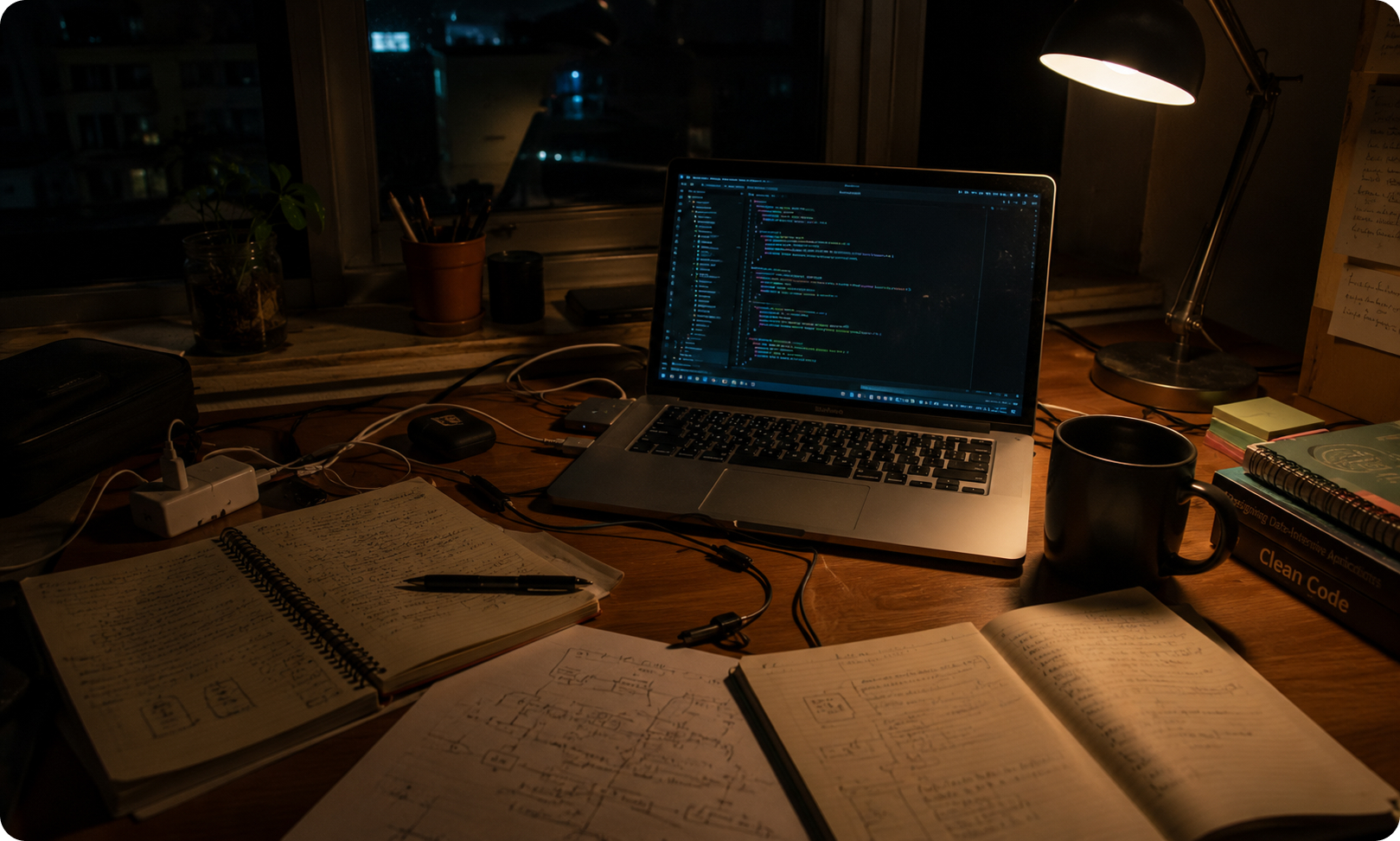
It is the unremarkable majority sitting underneath it, the part nobody photographs. I used to think of those hours as filler, the boring connective tissue between the moments that actually counted. I think differently now. The patience to sit with a bug for three hours, the discipline to keep going without anyone watching, the willingness to try again tomorrow when nothing worked today, all of that gets built almost entirely in the ordinary majority, not in the minority that ends up in a bio.
You Aren’t Famous, and That’s Actually Good News
Here is the thing I keep having to relearn, in different costumes, over and over. I am not famous. Nothing I make is likely to be seen by more than a handful of people, and most of those people will glance at it for four seconds before their thumb moves on to something else. This used to sound like a depressing sentence to say to myself. Slowly, over a couple of years, it has turned into one of the more useful ones I know.
If almost nothing you create will receive real attention, optimizing for an audience starts to look a lot like rehearsing a wedding speech for a wedding that was never going to happen. You spend the energy. You absorb the anxiety. There is no event at the end of it to justify any of the preparation. The obvious move, once you actually sit with that fact instead of flinching away from it, is to stop building for the imaginary crowd and start building for the version of yourself that is actually in the room. Which, on any given evening, is the only version of you there is.
There is an old line, often credited to Theodore Roosevelt, though the exact origin is genuinely disputed and probably older than either of us.
Comparison is the thief of joy.
For a long time I assumed that line was about other people, about scrolling through someone else’s highlight reel and feeling small next to it. It took me longer to notice the sneakier version of the same trap, which is comparing your unfinished, ordinary, private work against an audience that exists only inside your own head. You are not just comparing yourself to other people anymore at that point. You are comparing yourself to a fictional crowd’s fictional judgment, and somehow finding a way to lose against a jury that was never even empanelled. After a while, you stop changing the work. You start changing yourself. The cost of seeking validation is slowly becoming someone other than yourself.
I noticed this most clearly during hackathons, which is slightly ironic, because they are one of the few places where an audience genuinely exists. There are judges. There are other teams watching your demo. There is sometimes an actual stage with an actual microphone and a countdown timer ticking down in red digits behind you. And even there, once the pitch ends and the trophy photo gets taken, the project usually disappears straight into a GitHub repository that nobody opens again. I have folders full of projects that won something, somewhere, in front of real, non imaginary human beings, and I could not tell you the last time anyone besides me clicked into most of that code. If that is true of the handful of things that actually had live witnesses, imagine how much less true an imagined audience is for the sketch I do at eleven at night, or the half written blog post sitting quietly in a drafts folder, or the badly cropped photo from a trek that nobody has asked to see and nobody ever will.
I used to check things I now find slightly embarrassing to admit. Star counts on a repository I had built for fun over a weekend. View counts on a blog post I had written mostly to get something off my chest. I would refresh these numbers the way you check a wound to see if it is healing, half hoping for progress, half certain there would not be any. Most of the time, there wasn’t. Most of what I build sits at some small, unglamorous number that never moves much, and for a long time I treated that as a verdict on the work itself, when it was really just an accurate description of how little attention any of us are owed by default.
Even the moments that did attract attention turned out to be surprisingly brief. A feature on Devpost brought messages from people I had not spoken to in years, and for a few days I felt, almost against my better judgment, as though the audience I had been imagining had finally materialized. Then the messages stopped. The world returned to its usual size, small, local, mostly indifferent to whatever I happened to be building that weekend. I do not say this bitterly. If anything, I say it with gratitude. Attention, even earned attention, is a spike, not a baseline. Building your sense of the work around the spike is building on the least stable part of the whole structure. There is a strange freedom in being largely unknown. Expectations have very little to hold on to when nobody is watching.
None of this is a complaint, in the end. It is closer to relief. Once you actually accept that almost nothing you do will be seen, the whole exercise stops being a performance and goes back to being what it originally was, before you learned to perform in the first place, which is something you do because doing it feels good, or interesting, or like the right use of a Tuesday evening that would otherwise have disappeared into scrolling. The audience was never the point. It only felt like the point because somewhere along the way, most of us picked up the habit of imagining one anyway, the same way you might absentmindedly hum a tune you did not choose to start humming.
The Hobby That Doesn’t Need a Style
Take a craft or an artistic hobby, any of them, and the advice more or less stays the same. Focus on getting better at the actual skill and enjoy however many directions that skill happens to pull you in along the way. You do not need a personal style. Nobody is waiting to recognize your work in a gallery of strangers, so there is no real reason to lock yourself into a signature look before you have even figured out what you enjoy doing.
I go back and forth between sketching and photography, mostly because I never fully committed to either one, which used to bother me a great deal and now mostly does not. Sketching came first. Like a lot of children growing up in Bengal, I was nudged into drawing classes almost as soon as I could hold a pencil. Somewhere along the way, what began as something my parents signed me up for quietly became something I genuinely enjoyed. I kept at it for years, long enough to become reasonably good, before board exams and entrance coaching slowly pushed it out of my life. By the time I started college, I had barely drawn anything in years. Then came the long, quiet months of the pandemic. In my second year, with more evenings than I knew what to do with, I picked up a sketchbook again. I drew whatever happened to be around me, mostly portraits, sometimes landscapes copied from photographs on my phone, and once an entire notebook filled with nothing but eyes after a senior casually remarked that they were the hardest thing to draw. He was right. I still do not draw them particularly well, and I have made a kind of uneasy peace with that.
Looking back, photography had been around much longer than I realized. My father owned one of those old Kodak film cameras, and as a child I was endlessly fascinated by it. Film was expensive enough that every frame felt like it had to earn its place, so I learned very early that pressing the shutter was a decision rather than a reflex. I did not understand composition or lighting back then. I just liked looking at the world through a viewfinder. Years later, when cameras became cheaper and phones became good enough, I found myself drifting back to photography for much the same reason I had returned to sketching. Not to become a photographer, just because I enjoyed seeing the world a little more carefully. The fascination had always been there. The habit came much later.
Eventually, trekking gave me a reason to carry a camera of my own. I have always liked hiking, the kind where your legs hurt for two days afterward and you tell yourself, somewhere around hour four of the descent, that it was absolutely worth it, and mean it slightly less than you did at the summit. At some point I started carrying a camera with me. Not a particularly good one, just something sturdy enough to survive being dropped, because I am exactly the sort of person who drops things. Most of the photographs from those early trips ended up in black and white. Not because I had studied Ansel Adams or knew anything about the zone system, but because the editing app on my phone had a black and white filter that made mediocre light look moody instead of flat. At the time, moody felt like a considerable improvement.
For a while I genuinely believed this meant something about my aesthetic, that I was quietly becoming a black and white photographer with a Point of View, capital letters fully implied even if I never said them out loud. I looked up other black and white photographers online, studied their compositions, half convinced I was building toward something coherent. Then I got bored of it, the way you get bored of most things you did not actually choose so much as fell into by accident. I started shooting in colour again without any ceremony, went through a short and slightly embarrassing phase of only photographing food, badly, then stopped carrying the camera entirely for almost a year while other things took over. If I had been building an Instagram account around the moody black and white aesthetic, if I had let strangers start expecting a certain kind of image from me, that shift would have felt like a small betrayal of some imaginary brand I had signed up for without meaning to. Since I was not building anything for anyone, it just felt like Tuesday.
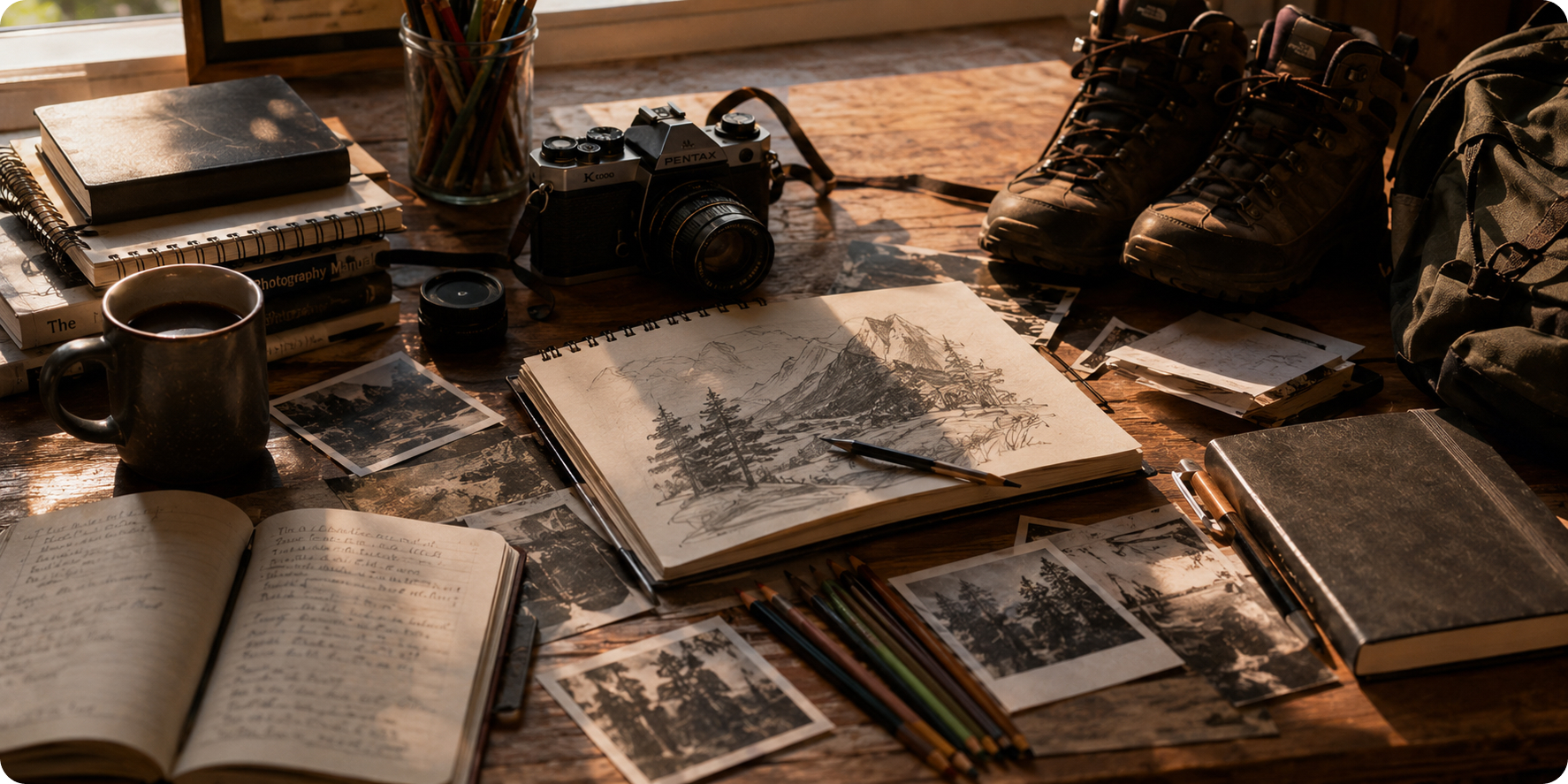
I was not Ansel Adams. Nobody was going to write an annoyed comment about my inconsistent style, because nobody was tracking my style in the first place, including, for long stretches, me.
There was a shy boy on my floor in the hostel who was, by any honest measure, a genuinely talented artist, the kind of talent that made the rest of us go quiet when he showed us something new. For a while, I compared every sketch I made against his without really meaning to, and the comparison did nothing useful at all. It just made me want to draw less. He, oddly, stopped drawing almost entirely by our final year, worn down, he told me once, by the pressure of always being expected to be the good one whenever someone asked him to draw something for a college event or a farewell card. I kept drawing, somehow, occasionally. He mostly stopped, despite being better than me by any measure that mattered. I think about that whenever I catch myself ranking my own hobbies against someone else’s talent. Talent, it turns out, is not what keeps you doing something. Something else is, and it has very little to do with how good you are relative to the person next to you.
There is a version of an idea that Ira Glass talks about, in an interview clip that has been passed around so many times among people trying to make things that it has practically become folklore. The gist of it is that when you are starting out, your taste is usually running well ahead of your actual ability, so the things you make disappoint you against a standard you can already see clearly but cannot yet reach, and the only way through that gap is to keep making things anyway, on a schedule, for a long stretch of time, until your hands finally catch up to your eye. Glass put the disappointment part more bluntly than most people manage to.
Your taste is why your work disappoints you.
I like that idea a lot. I would only add one small thing to it. The gap seems to close faster, and hurts considerably less, when you are not simultaneously trying to manage how the gap looks to strangers while you are still standing inside it. Skill and taste can fight it out privately, with no referee, no scoreboard, nobody keeping count except you. It is a much fairer fight without an audience watching from the sidelines.
The mistake I kept making, back when I still made it regularly, was treating every sketch or photograph as a small referendum on who I was as an artist, instead of treating it as one rep in a much longer, much less dramatic set. Nobody looks at their fifth attempt at a push up and asks whether it represents their fitness identity for all time. They just do the rep and move on to the sixth, mildly annoyed at their own form, and try again tomorrow. Hobbies deserve exactly the same forgiveness that a gym floor gives you by default. You are allowed to be all over the place stylistically, drifting from black and white to color to food to nothing at all for a year, because you are not, in fact, building a body of work for a retrospective that will never be held. You are just getting slightly less bad at something you enjoy, one uneven attempt at a time, with nobody keeping score except the part of your brain that insists on keeping score anyway, out of habit, long after the habit stopped serving any purpose.
There is also something quietly freeing about accepting that mediocrity, for a good long while, is simply where you are supposed to be. Not a failure. Not a problem waiting to be solved. Just the honest place between starting and becoming good. I spent far longer than I should have feeling embarrassed by sketches that were, by any fair measure, exactly what you would expect from someone returning to drawing after years away from it. The embarrassment was never really about the sketches themselves. It came from imagining an audience that did not exist, judging a timeline that made no sense, for a hobby that had never promised to make me impressive to anyone.
Seasons Of Interest
Nobody warns you, when you are younger, that interests rotate. You assume that whatever you are into right now is a fixed part of who you are, and then a year passes and half of it has quietly been swapped out for something else without asking your permission first.
Some months it is photography, the way I just described. Other months it is reading, three or four books deep before I notice I have not opened the camera app in weeks. Then it swings back to drawing for a stretch, or to writing, or to actual coding for its own sake rather than for a hackathon deadline, the kind of coding where you follow a curiosity into a corner of a codebase nobody asked you to touch. Football eats an unreasonable share of most evenings during a tournament like this one. And then there is Counter-Strike, which I am slightly embarrassed to admit I have put somewhere north of six and a half thousand hours (apparently, that’s almost 280 days worth of hours) into playing CS:GO and now CS2, a number I would rather not know, except Steam has been quietly keeping track on my behalf for years xD.
None of these seasons overlap neatly. Some months I am not doing anything that could be called a hobby at all, just getting through the week. I used to feel a low hum of guilt about the rotation itself, as if consistency were the actual goal and I kept failing to hit it. I do not feel that anymore. Nobody is tracking a coherent personal brand across sketching, reading, photography, football, and however many hours of Counter-Strike, except the part of my brain that occasionally still tries. The rotation is not a lack of discipline. It is mostly just what curiosity looks like when nobody is grading it.
The Life Nobody Sees
Most of the year I am on campus at Guwahati, far enough from home that I mostly remember it rather than live in it. Coming back changes the texture of a day in ways that took me a while to notice, because none of them are dramatic enough to write home about, which is a strange thing to say about being home.
I help my mother cook now, in the loose, unscheduled way that has nothing to do with becoming a good cook and everything to do with wanting to be in the kitchen while something is happening. Cutting vegetables while a podcast plays in the background has become one of those small, unremarkable rituals I did not know I would miss on campus. I am learning family recipes slowly and imprecisely, by watching rather than measuring, which means half of them will probably come out wrong the first few times I try them alone. In the evenings I make tea or coffee for whoever is around, mostly because someone has to and it is a nice enough excuse to stand in the kitchen for ten minutes doing nothing more demanding than waiting for water to boil. There is the local market for small errands, the kind that used to feel like a chore and now feels like a walk with a small, forgettable purpose attached. Some nights we just sit after dinner, my parents and I, without a phone anywhere near the table, saying very little of consequence.
None of this is really about the cooking, or the tea, or the market. The point, if there is one, is rediscovering ordinary activities that nobody is going to applaud. The afternoon light hits my room at a specific angle around four that I never used to notice. The pressure cooker whistles twice from the kitchen and I know exactly what that means without looking up. Kids two houses down play cricket on the street most evenings, loud enough that I can track the score without watching. Summer still brings power cuts, shorter than they used to be, long enough to remember what the house sounds like without a fan running. The smell of food drifts into whatever I am writing. I wait for tea to cool before I let myself pick up a pencil, mostly because I always burn my tongue if I do not.
There is also a newer, smaller version of this same slowing down that has nothing to do with home at all. I have been spending a bit of time most days on Discord, across a handful of random servers, mostly just talking to people I have never met about nothing in particular. If the vibe or the frequency happens to match, I have noticed those same people start showing up in the same conversations again, and I start looking out for them too, in the low-key way you look out for a regular at a coffee shop. Well, it is surely not a replacement for real, in-person friendship, and I do not pretend it is. It is just fun, in a small, unbothered way, and fun does not always need a bigger justification than that.
Curiosity Without A Goal
Not everything you get curious about needs to justify itself later. Somewhere in the culture around building things, a habit has crept in where any spare hour spent learning something gets quietly evaluated for its eventual payoff, as if curiosity without a destination were somehow wasted.
I fall into this less than I used to, mostly because I noticed how much of what I actually know came from rabbit holes with no plan attached. Reading about how a specific compression algorithm works, not because any project needed it, just because the explanation I stumbled on was well written. Learning the history of some obsolete protocol for no better reason than it showing up in an old forum thread I was reading for something else entirely. Not everything has to become a startup, a research paper, a GitHub repository, or a product with a name and a landing page. Sometimes you learn something because it looked interesting for twenty minutes, and that is allowed to be the whole story.
That way of thinking changed something else as well. It changed how I built things.
Learn to Love Your Ugly Interface
The same logic, it turns out, applies just as bluntly to building things. If you want to make an app or a website and the part you actually enjoy is the logic underneath rather than the pixels sitting on top of it, then let it be ugly. Nobody is going to hold that against you, because design, by its very nature, is something built for an audience, and you have already established, by this point, that you don’t currently have one.
This one hit close to home because I spent a good chunk of my hackathon years as the person on the team who wrote the backend logic while somebody else, usually more patient with pixels than I was, made everything look presentable in the final hour before the demo. Left entirely to my own devices, my interfaces have historically looked like they were designed by someone actively hostile to colour theory.
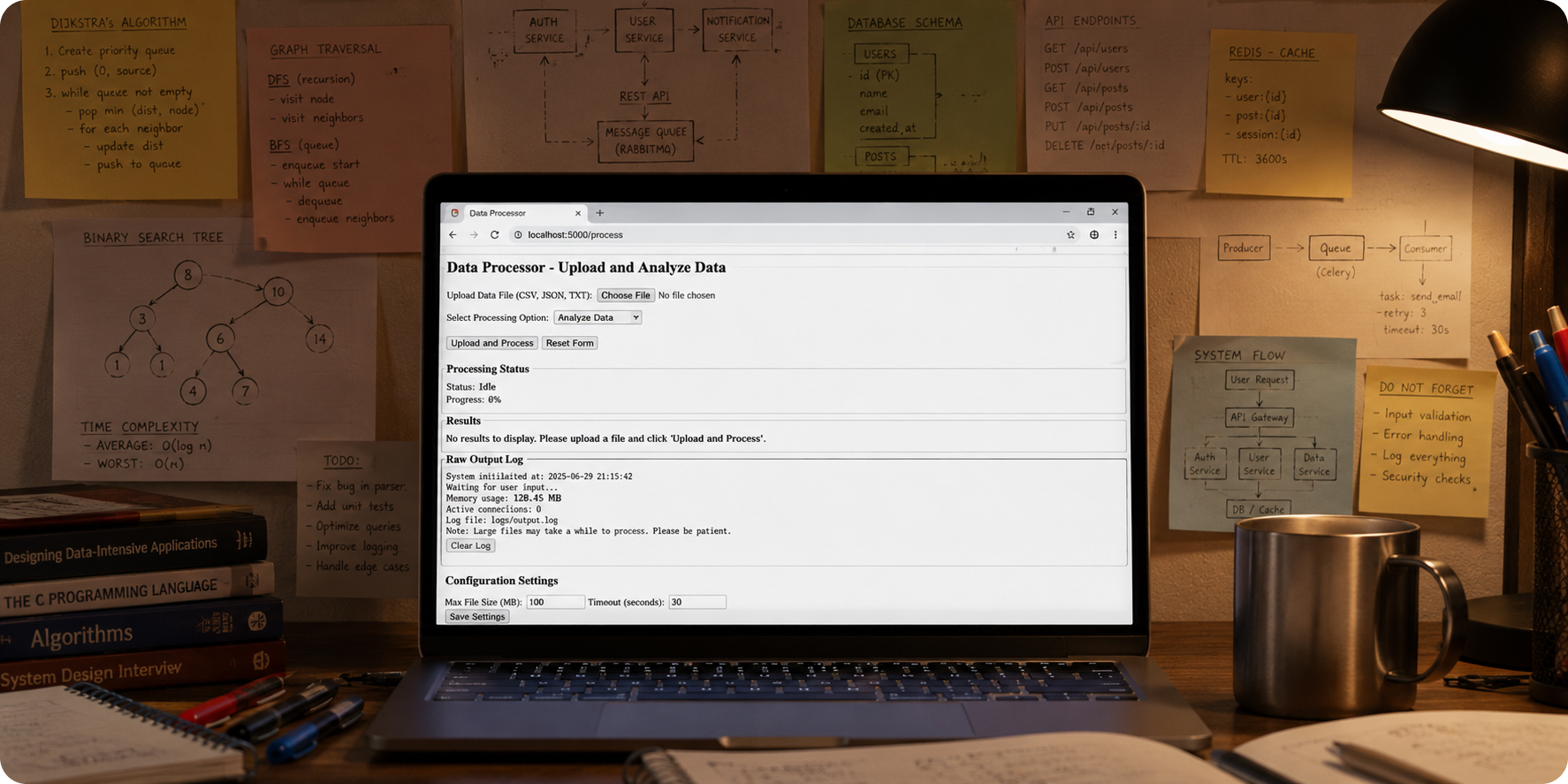
Buttons in default grey. Text overflowing its container in ways that would make any design student wince. A submit button that, on at least one occasion I am not proud of, was simply the word Submit set in Times New Roman, because I had run out of both time and interest in fixing it about four hours before the deadline.
For a long time I treated this as a personal failing, something to apologize for before anyone even had the chance to ask. Then I realized something almost embarrassingly obvious. I was spending precious time polishing something that almost nobody had seen yet. The projects people actually cared about, both inside hackathons and outside them, were almost never chosen because of how they looked. They got chosen because they worked, because they solved something genuinely useful, because the core idea underneath was sharp even when the wrapper around it was clumsy.
Real artists ship.
Whatever you think of the source, the underlying point holds up under its own weight. A working thing that looks bad will always beat a beautiful thing that only exists inside your head, or worse, a beautiful thing you never finished at all because you spent three weeks picking a colour palette instead of writing the one function that actually mattered.
There is also a quieter, more practical reason I learned to tolerate my own ugly interfaces, and I owe much of it to years spent in open source. Design is, at its heart, a form of communication with people who are not you. If there is no audience yet, spending your limited energy polishing that communication is a little like rehearsing a speech nobody has asked you to give. Get the thing working first. There is something oddly satisfying about an unapologetically unfinished interface, because its rough edges are often proof that your attention went where it mattered most. Through my past open-source mentorship programs, I learned very quickly that reviewers cared far more about whether my code handled edge cases, made sense, and held up under scrutiny than whether the interface looked polished. It took me an embarrassingly long time to realize the same priorities applied to almost everything I built outside work as well. Function first. Form later, if it ever becomes necessary. If a designer eventually comes along and wants to make it beautiful, wonderful. That is a genuinely good problem to have. Until then, the ugly interface is not a flaw. It is closer to a receipt, quietly proving you spent your time on the part that actually mattered.
I think about the hacker persona a fair amount in this context, partly because I have spent enough time inside hackathons to have developed real opinions about it. There is a popular image, mostly borrowed from films, of the hacker as some isolated figure hunched over a keyboard in a dark room, indifferent to how anything looks because he is indifferent to people generally. In my experience it is closer to the opposite of that image. The builders I respect most are scrappy and resourceful and deeply, almost stubbornly collaborative, stitching together duct tape solutions at two in the morning with teammates scattered across three or four time zones, none of them particularly concerned with whether the demo looks like it came out of a design agency retainer. What they care about, the only thing they seem to genuinely care about at three in the morning, is whether the thing works when they hit run. Everything else is a later problem, if it ever becomes a problem at all.
Writing Badly, On Purpose
Blogging sits in a strange, useful category all its own. It is fun in a way that is hard to explain to people who have never done it regularly, and it is therapeutic in a much more straightforward way, the same way talking a problem through out loud sometimes solves it before the other person on the call has even finished responding. Grammar and editing, on the other hand, are neither fun nor therapeutic. They are maintenance. Necessary in small doses, quietly deadly in large ones.
I started writing properly during the strange, suspended months of the pandemic, when college had moved online and half the structure that normally organizes a day had simply evaporated. Hackathons continued, oddly, in virtual form. Coursework continued, badly. Open source contributions kept eating whatever hours were left over, and somewhere in the gaps between all of it, I picked up the habit of typing out what any of it actually felt like, because saying it out loud to friends who were equally exhausted did not always fully scratch the itch. Some of those early posts were about specific technical things I had learned the hard way, the kind of post that exists mostly so that future me, googling the exact same error six months later, has something useful to find. Some were just me complaining, in slightly more organized language than I would use out loud, about impostor syndrome, or about the strange vertigo of being on a video call with a professor at a university I could not possibly have gotten into as an undergraduate, trying my best to sound like I belonged in the room.
The posts that turned out well were almost never the ones I edited carefully. They were the ones I wrote in a single sitting, half convinced nobody would ever read them, and published anyway because publishing felt like closing a loop rather than opening a new one. The posts I agonized over, rewriting the same sentence six different ways to sound smarter, reordering paragraphs to seem more structured than the thought actually was, almost always read worse in the end, stiffer, more distant, less like a person and more like a person imitating a person. There is a kind of anxious over varnishing that creeps into anything you polish for an audience you are imagining rather than one you actually have, and readers, even the small handful you eventually get, can somehow smell it from a sentence away.
Anne Lamott has a phrase for the antidote to this, the idea that everyone is allowed a shitty first draft, that the entire point of a first attempt is simply to exist, so that a better one has something concrete to work from.
Almost all good writing begins with terrible first efforts.
I would push that idea slightly further, at least for the low stakes personal writing most of us are doing on our own blogs at midnight, half asleep, mostly for ourselves. The first draft is often allowed to just be the final draft, provided the thoughts underneath it hang together in some coherent order. Run it through Grammarly to catch the embarrassing typos, the misplaced commas, the sentence that accidentally says the exact opposite of what you meant to say. Then let it go entirely. The value was mostly located in the writing of it, not in whatever thin layer of polish gets applied to it afterward.
This is easier to say than to consistently believe, especially if you spend any time around people who treat their blogs like personal brands, complete with posting schedules, carefully chosen header images, and a call to action tucked neatly into the final paragraph. I drifted in that direction for a while myself. Without consciously deciding to, I started writing as though every sentence needed to justify itself to an audience that wasn’t actually there. The writing became more careful, but not more honest. Somewhere along the way I stopped sounding like myself and started sounding like someone trying to sound like a writer. The strange thing was that nobody had asked me to do that. I had invented the expectation myself. When I stopped worrying about whether a post felt impressive enough and simply wrote what I genuinely wanted to say, the writing became looser, messier, and almost immediately more truthful.
LinkedIn taught me the contrast more sharply than anything else could have. I keep a profile there, mostly because it feels like something you’re supposed to have, but I almost never post. More than once I have written something, stared at the Publish button for a minute or two, and quietly closed the tab instead. Something about that particular platform makes me second guess my own voice before anyone else has the chance to. The sentences become tidier, more careful, less like something I would naturally say and more like something I imagine people expect to read. Most of those drafts never make it any further.
My blog has always felt different. It has never asked me to sound impressive. It has only ever asked me to sound like myself on a given evening. That turns out to be a much harder thing to fake, and a much more worthwhile thing to practice.
Learning To Be Bored Again
Boredom has quietly become an endangered activity. There is always a phone within reach, and the phone always has something willing to fill the next four seconds for you, which means the specific discomfort that used to precede most of my hobbies rarely gets the chance to build anymore.
I mean that quite literally. Almost every hobby or obsession I have talked about in these pages began the same way. Not with a plan or a goal, but with an afternoon that had nothing demanding my attention. Boredom was not a problem waiting to be solved. It was the starting point.
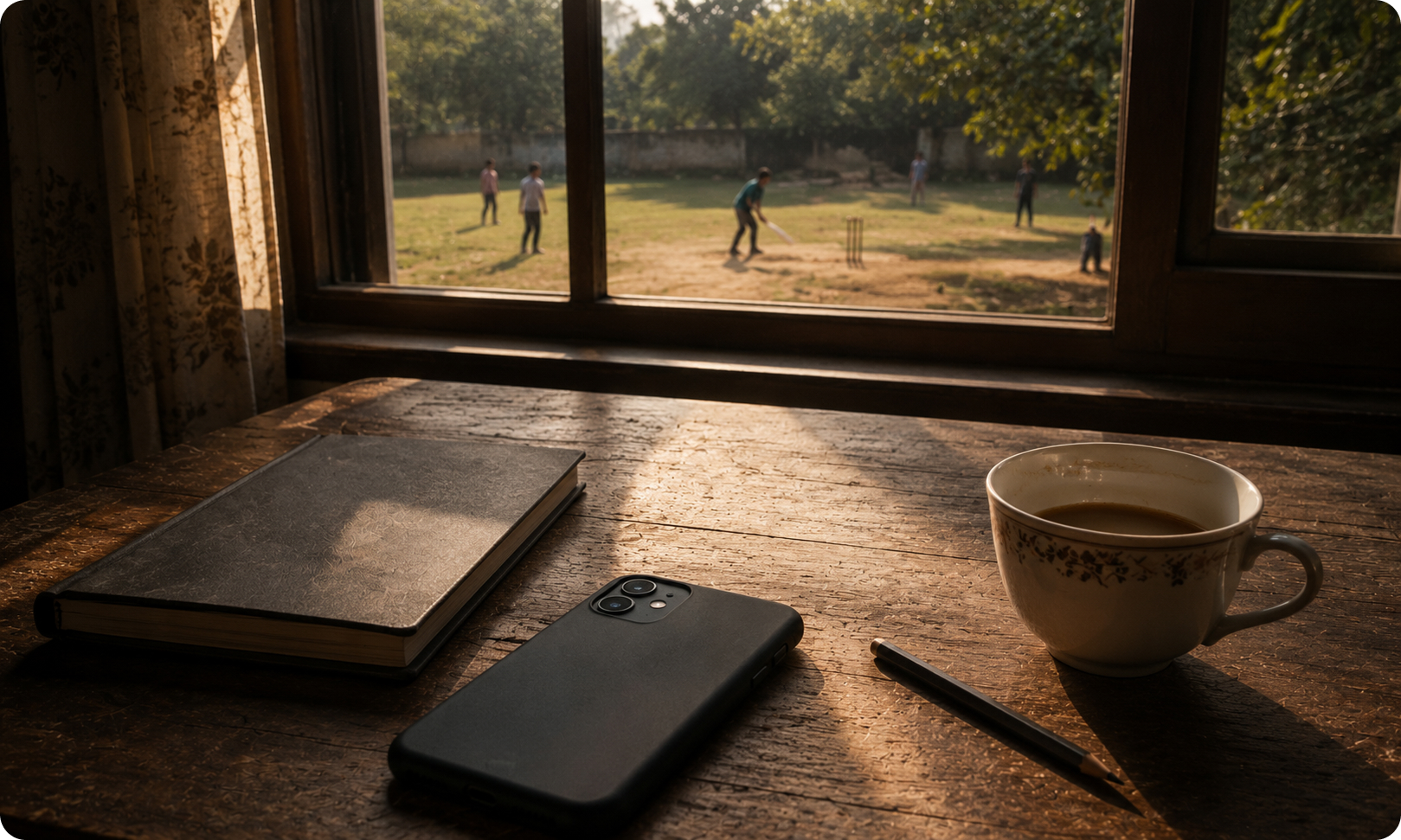
You got bored, and because there was genuinely nothing else competing for your attention, you wandered into something. Sometimes it was a sketchbook. Sometimes it was a book. Sometimes it was an old gadget sitting in a drawer that suddenly seemed interesting enough to take apart.
I have had to relearn this on purpose, which feels a little absurd to admit, given that boredom is supposed to be the default state you fall into rather than something you schedule. Leaving the phone in another room for an hour. Letting an evening stay genuinely empty instead of reaching for something to fill it. Most of the time nothing happens, and that is fine, that is sort of the point. Occasionally, though, the emptiness gets uncomfortable enough that curiosity walks in on its own to fill the space, the same way it always used to before there was an easier option sitting in my pocket.
The Fastest Way to Kill Something You Love
If there is one mistake in this whole area that deserves to be singled out as the worst, it is daydreaming about how to monetize whatever you happen to be doing. Not the actual monetizing, necessarily, just the daydreaming itself, the habit of mentally sketching out a business model for a hobby that has not even finished being a hobby yet. It is one of the fastest, most reliable way I know to optimize for exactly the wrong things, and it tends to drain the fun out of an activity faster than almost anything else I have watched happen to people, myself very much included.
Watching other people burn themselves out has made me oddly protective of the things I enjoy for no particular reason. Every now and then I catch myself wondering whether a hobby ought to become something bigger, a YouTube channel, a newsletter, a course, a side business. The thought usually sounds sensible for about five minutes. Then I remember that I liked the hobby perfectly well before I started imagining invoices and growth charts attached to it. Most of the time, that is enough to leave it alone.
There was a smaller version of the same trap around cycling. I enjoy long rides with no destination in mind, mostly because they are one of the few places left where my thoughts are not competing with a screen. One weekend I caught myself wondering whether those rides could become a YouTube channel. Within an hour I was researching cameras, thumbnails, and branding instead of getting on the bike. The ride never happened. Looking back, that feels like a strange kind of self sabotage. I had spent my excitement on the idea of the hobby instead of the hobby itself.
There is a specific flavour of this trap that hits harder if you already work in tech, because the culture around tech treats turning any spare skill into a side hustle as a kind of moral default, the responsible thing to do with any hour that is not already spoken for. Comparison culture and the creator economy feed each other here in a way that is easy to miss from the inside, until you notice you are doing it. You see someone roughly your own age turning their hobby into a small, tidy business, and it stops looking like their particular story and starts feeling, quietly, like a benchmark you are somehow failing to hit. Productivity & the modern gen-z hustle culture layers its own hum on top of all this, the constant background suggestion that any hour not generating either output or income has effectively been wasted. None of that is really about the hobby anymore, if it ever was. It is about a scoreboard that got smuggled in through a side door while you were busy enjoying something.
I support effective altruism as a general way of thinking about how to do good in the world, and one thing that framework taught me, almost by accident, is how differently it feels to give something away for free versus trying to extract value from it. I mentor a handful of younger students, mostly in open source and competitive programming, without any compensation, and it remains, oddly, one of the most satisfying things I do with my time. I have never once daydreamed about monetizing the mentoring itself, and I think that is precisely why it has stayed enjoyable for years instead of the usual six weeks. The moment you attach a business model to something, you start measuring it, and measurement changes behaviour even when you are the only one keeping score.
Kurt Vonnegut, in one of his later books, wrote something close to this, about why practicing a craft is worth doing regardless of where it leads.
…no matter how well or badly, is a way to make your soul grow.
I think about that line whenever the money daydream starts creeping back in uninvited, because it draws such a clean line between two very different reasons a person might do something. One reason is that it grows something quiet in you. The other is that it might eventually pay for itself. Both reasons are legitimate on their own terms. They are simply not the same reason, and mixing them up too early tends to be exactly how the growing part stops.
None of this means you should never build a business out of something you genuinely love. Plenty of people do, and some of them manage to keep loving the thing even after the spreadsheets show up and start demanding attention. What I have grown more skeptical of is the daydreaming itself, done early, done idly, done as a kind of insurance policy against the mild discomfort of doing something purely because it happens to be enjoyable. If a hobby is ever going to become work, let that happen slowly, as a genuine consequence of getting good at it over years, rather than as the starting premise the whole thing gets built around from day one. Save the business plans, the growth targets, the entire vocabulary of scaling and monetizing, for the work you already do to pay rent. Let the hobby stay a hobby for as long as it wants to, unbothered by any of that.
The Quiet Satisfaction Of Finishing Something
There is a specific, undersung pleasure in finishing something nobody asked you to finish. Not succeeding at it. Just finishing it, closing the loop, putting the pencil down.
Finishing a sketch, even a bad one, has a different weight to it than starting one. Finishing a blog post, even one three people will ever read, closes a small door that had been sitting open in the back of my mind for however long the draft was unfinished. Fixing a bug that has been quietly annoying me for a week does something similar, a small click of relief that has nothing to do with how impressive the fix was. Cooking an actual meal instead of ordering in. Cleaning a room that had, without any single dramatic moment, become slightly unlivable. None of these have a scoreboard attached. Nobody is grading the finish.
I think the satisfaction is not really about the quality of the result at all. It is about the loop itself. You open something, you carry it around half done for a while, and then, eventually, you close it. The closing is the part that feels good, independent of whether anyone else would call the result any good. It is the same instinct that made publishing a shaky blog post feel better than perfecting one that never went up. The finishing is the point. Everything after that is optional.
What I Actually Do Now
None of this turned into a tidy system, which is probably appropriate given the subject matter. I still begin things I never finish. I still disappear into hobbies for a few weeks before drifting toward something else. I still write drafts that never become posts because the coherent thought bar goes unmet even by my own generous standards. And every so often I still catch myself imagining an audience that is not actually there. I have mostly stopped getting annoyed at myself for it. It seems to be part of growing up online. You do not really switch it off. You just get a little quicker at noticing it before it starts making decisions on your behalf.
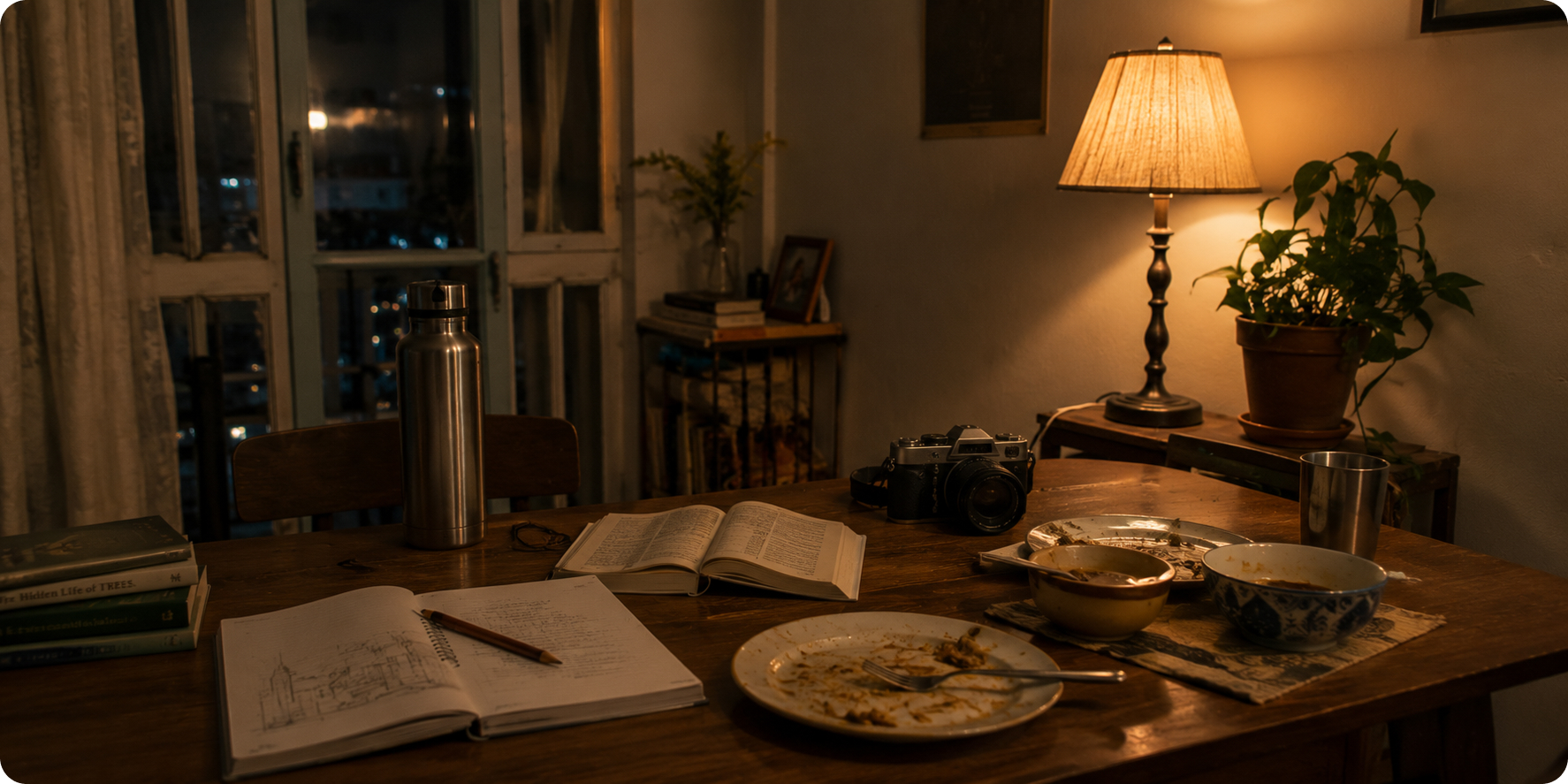
What actually changed is much smaller than I expected, and much more useful. I spend less time measuring things that never needed measuring in the first place. I no longer feel the urge to turn every enjoyable evening into evidence that it was well spent. Some things simply happen now, and then they end. A meal gets cooked and disappears. A page gets filled and stays in the notebook. A photograph never leaves the hard drive. A book closes without becoming a recommendation thread for strangers. The experience no longer feels incomplete just because nobody else knows it happened.
The goals I set for myself now point inward instead of outward. Get slightly better at drawing hands. Finish the half built tool instead of starting a shinier new one. Write the post even if it never gets read by a single person besides me. None of these goals have an audience attached to them anywhere, because none of them actually need one.
I am writing this during the current FIFA World Cup (2026), half watching a match on a laptop propped against my knee while I type, hoping in the specific, slightly irrational way you hope for a football team that has nothing to do with you personally, that Argentina go far and that Messi gets one more good run out of this tournament before whatever comes after football for him. It occurs to me, watching, that even football fandom fits neatly into everything I have just spent several thousand words working out. I do not post about every match. I do not perform my support for an audience of fellow fans keeping score of my loyalty. I just watch, badly explain the offside rule to anyone unfortunate enough to be in the room, and feel something genuine when the ball goes in. Nobody needs to witness that for it to have mattered.
I think back, often, to that evening with the sketchbook, the lopsided jawline, the imaginary scroll of faces I conjured up out of pure habit before catching myself. I finished the drawing that night. The eyes were still uneven. I never posted it anywhere.Nobody has ever seen it, and I have slowly come to believe that was never the point. It mattered because I made it. That turned out to be enough.
Thanks for reading. Comments and corrections are welcome.


